
The number of women and girls seeking legal abortion services in Rwanda rose from 2,200 to 3,200 in one year. But interviews reveal that limited information, fear of judgement and financial concerns still stand between women and safe healthcare.
A service that can make the difference between life and death
For one woman in Rwanda, knowing that legal abortion services were available at health facilities made the difference between receiving professional medical care and risking her life through unsafe alternatives.
She says that without the service, she might have looked for other ways to end her pregnancy, potentially exposing herself to serious health complications.
“Personally, this service helped me. If it had not been available, I would have looked for another way to terminate the pregnancy. But when you go to such places, you can encounter serious problems. I believe having access to this service at a health facility protected me from taking that risk,” she said.
She requested anonymity because of the sensitivity surrounding abortion.
However, while more women and girls are accessing legal services, others remain unaware that the services exist or are afraid to approach healthcare professionals.
In Musanze District, Nyinawumuntu Alice says she had never known that health facilities provide abortion services under legally permitted circumstances.
“This is the first time I have heard that hospitals allow people to access abortion services. Where we live, there are young girls who become mothers while they are still very young, including some who have not reached the age of majority,” she said.
For Uwimana Diane, the challenge goes beyond a lack of information. She says fear of being questioned or judged by healthcare workers could prevent her from seeking help.
“If you go to a doctor and tell them that you have come because you want an abortion, what if they start questioning you and asking how you became pregnant? What if they tell you that you should simply give birth? Personally, I would be afraid to go. I did not even know whether hospitals provide this service,” she said.
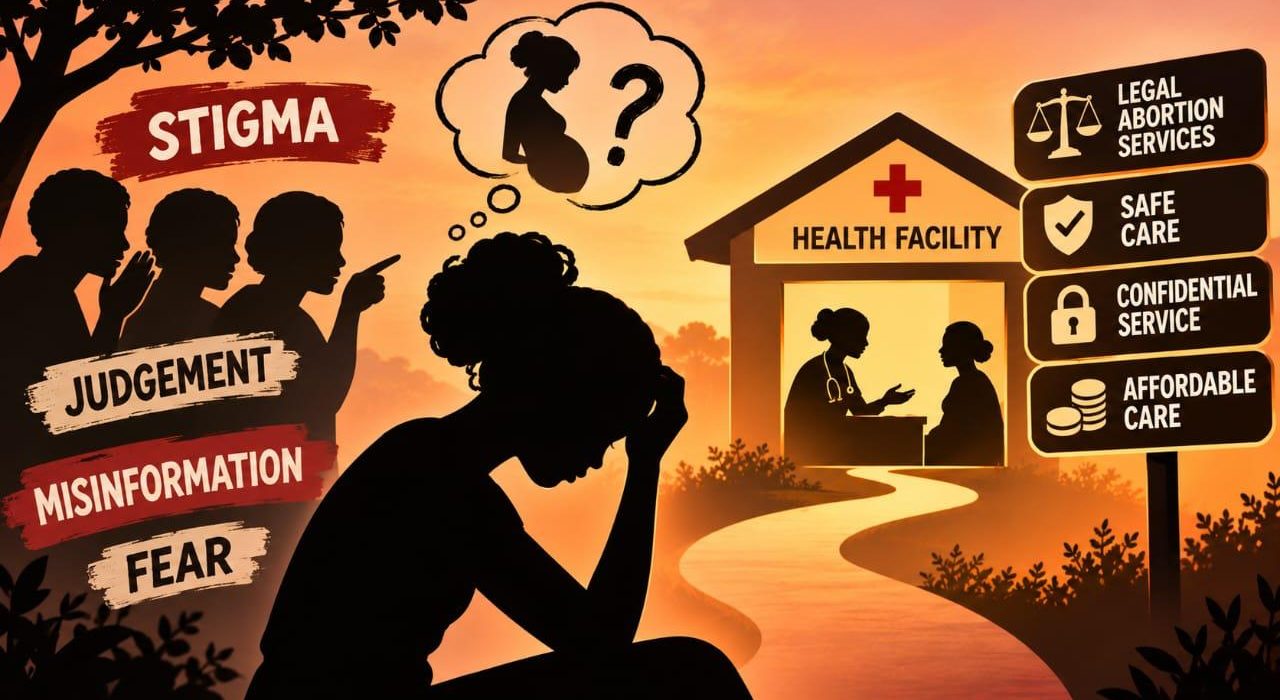
Their accounts reveal a gap between the availability of legal healthcare services and women’s confidence in accessing them. While some are benefiting from the services, others are held back by misinformation, stigma and fear of judgement.
The numbers: 1,000 more women in one year
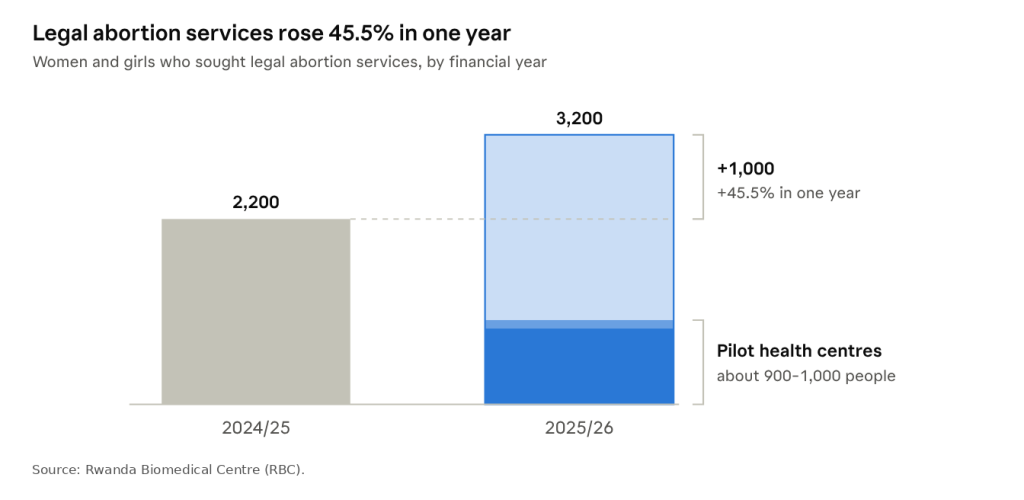
Figures from the Rwanda Biomedical Centre (RBC) show that approximately 3,200 women and girls sought legal abortion services during the 2025/2026 financial year, compared with 2,200 in 2024/2025.
This represents an increase of 1,000 people, or 45.5 per cent, in one year.

Dr François Régis Cyiza, who leads maternal and child health programmes at RBC, says demand has continued to grow.
“Looking at the figures from around three years ago, we found that the number of people seeking legal abortion services in health facilities was between 1,800 and 2,200 annually. However, the number has now increased to approximately 3,200. This means we have an increase of about 1,000 people, representing 45.5 per cent compared with the previous figure of 2,200. It shows that more people are coming forward to seek these services,” he explained.
Why are the numbers rising?
The rise coincides with a change in how services are delivered. To improve access, RBC introduced a pilot programme in 43 health centres across Musanze, Karongi, Rwamagana and Ruhango districts.
Between July 2025 and June 2026, approximately 900 to 1,000 women and girls received services through the participating health centres. That is roughly a third of the national total for the same period.
The programme uses trained nurses and midwives, working with hospital-based doctors to assess patients and provide clinical oversight. RBC plans to use the experience to guide wider expansion.
The women behind the statistics
For women who have received the service, access can mean avoiding dangerous alternatives and receiving professional medical attention.
Umutoni Grace from Musanze District says that finding a qualified healthcare provider helped her avoid the risks associated with unregulated procedures.
“Before I learned that hospitals could provide this service, I did not know where to turn or whom I could trust. I was worried about my health and also afraid that people would judge me. When I finally learned that I could seek professional medical assistance, I felt that I had a safer option. I believe women should receive accurate information so that they do not put their lives at risk because of fear or lack of knowledge,” she said.
A second woman who received the service, interviewed anonymously in Musanze, described how accessing care changed her situation.
“Before I received the service, I was worried because I did not know where to go or whom to ask for help. I feared that if I approached the wrong people, I could put my health at risk. When I learned that I could receive medical assistance at a health facility, I decided to seek professional help. The healthcare workers examined me, explained the available options and guided me through the process. I felt relieved because I received care from trained professionals instead of risking my life through unsafe methods. I would encourage other women facing similar situations to seek accurate information and consult qualified healthcare providers rather than putting themselves in danger,” she said.
Why some women are still afraid
Despite the growing numbers, awareness remains a major challenge. Alice and Diane, quoted above, had both never heard that hospitals offer this service, and Diane said she feared judgement from health workers.
That fear is not only a perception.
Dr Bienfait Ntsinzi, a specialist in obstetrics and gynaecology, says:
“The patient is received by healthcare professionals or other trained personnel who assess their health condition, gestational age, reasons for requesting the service, and other relevant medical factors. They are then provided with care in accordance with Rwandan laws, Ministry of Health guidelines, and approved standards of patient care.”
“However, several challenges remain, particularly limited public awareness and knowledge regarding safe abortion services. These include a lack of awareness about who is legally eligible to access the service, fear among some individuals that their confidentiality may not be maintained or that other people may find out, and the personal beliefs and attitudes of some healthcare providers, who are sometimes reluctant or unwilling to provide the service.” Dr Ntsinzi said.
Dr Philibert Muhire, Director of Ruhengeri Hospital, says the number of people seeking legal abortion services at the hospital remains relatively low.
“Sometimes we receive between 10 and 12 people in a month. The number is still small, and I believe one of the reasons is that people have not fully understood that these services are available. There are also people who still attempt to terminate pregnancies outside health facilities. Our advice is that anyone who needs this service under the law should seek assistance from qualified healthcare professionals. Some people attempt to terminate pregnancies themselves, and this can cause serious health complications. Others may experience severe bleeding, infections or other problems that can eventually cost them their lives,” he said.
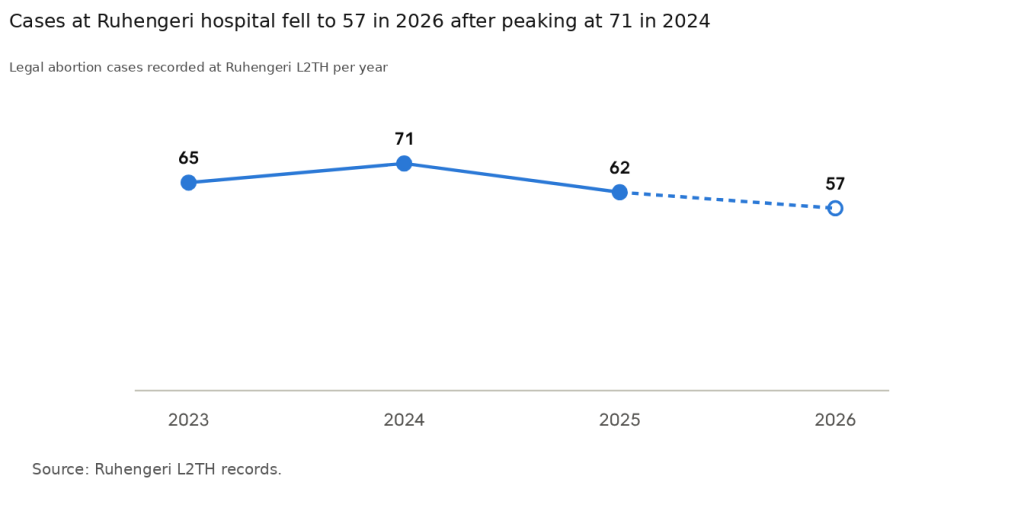
Records from the Ruhengeri Level Two Teaching Hospital (L2TH) show 65 legal abortion cases in 2023, 71 in 2024, 62 in 2025 and 57 in 2026. These are facility-level figures, not national totals.

From legal restrictions to expanded healthcare access
Rwanda’s legal framework has evolved over the years.
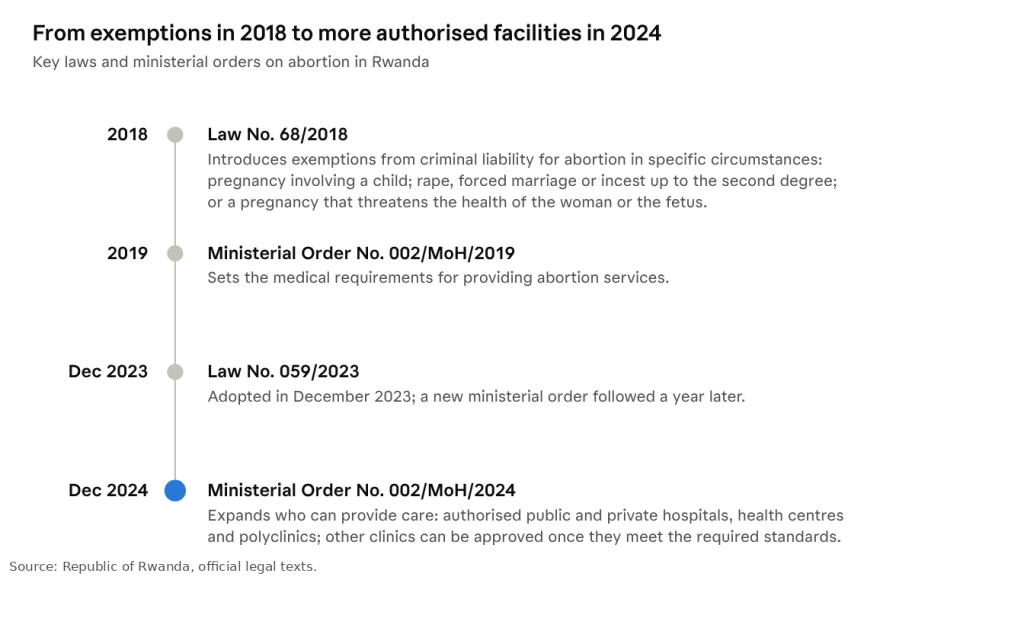

In 2018, the country adopted Law No. 68/2018, which introduced exemptions from criminal liability for abortion under specific circumstances. These include pregnancy involving a child, pregnancy resulting from rape, forced marriage or incest up to the second degree, and situations where pregnancy threatens the health of the pregnant woman or the foetus.
The framework was further supported by Ministerial Order No. 002/MoH/2019, which established medical requirements for providing abortion services.
In December 2023, Rwanda adopted Law No. 059/2023, followed by Ministerial Order No. 002/MoH/2024, published in December 2024, which expanded the categories of authorised health facilities.
Under the amended ministerial regulations, authorised public and private hospitals, health centres and polyclinics can provide abortion services, while other clinics may be approved after meeting the required standards.
The changes provide an opportunity to bring services closer to communities, reducing the need for some patients to travel long distances to larger hospitals.
The cost of unsafe abortion
The challenge is not unique to Rwanda.
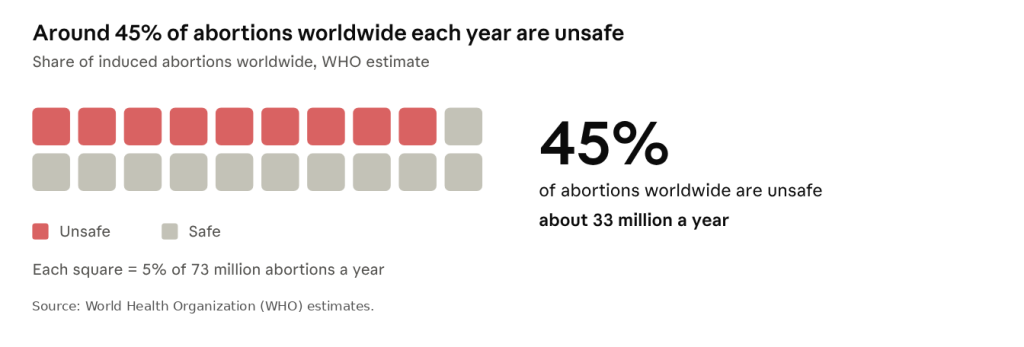
The World Health Organization (WHO) estimates that approximately 73 million induced abortions occur worldwide every year, with around 45 per cent being unsafe. Six out of every ten unintended pregnancies end in abortion.

Unsafe abortion can cause severe bleeding, infections, damage to reproductive organs and death.
Dr Bienfait Ntsinzi, a specialist in obstetrics and gynaecology, explains that safe abortion involves medically approved methods, appropriate equipment and trained healthcare professionals working according to medical standards and the law.
“The provision of safe abortion services in accordance with the law and established medical standards is essential for protecting the health and lives of pregnant women and girls. It has also contributed to reducing the risks associated with unsafe abortion practices. Previously, some women and girls resorted to traditional methods or other unregulated procedures performed by individuals without the necessary training, which could result in serious complications, including severe bleeding, infections, damage to reproductive organs, and even death. Access to safe and legal abortion services therefore helps reduce complications and deaths among women and girls who might otherwise seek unsafe abortion services from unqualified providers.” Dr Ntsinzi said.
What does it cost?
RBC says the cost of services depends on the patient’s insurance, medical examinations and additional treatment. Patients covered by Mutuelle de Santé may pay 10 per cent of eligible costs, while those covered by RAMA may pay 15 per cent, subject to the applicable insurance arrangements.
In specific cases, including pregnancies resulting from rape or involving children, assistance may be provided through Isange One Stop Centres, with eligible costs covered by the government through MIGEPROF.
The next challenge: Making sure women can reach the service
Rwanda’s increase from approximately 2,200 to 3,200 people seeking legal abortion services in one year shows that more women and girls are using these services. The pilot programme in 43 health centres also offers a way to bring care closer to communities.
But the experiences of Alice and Diane show that expanding services alone will not solve every problem. Women and girls also need clear information about the law, knowledge of authorised service providers, affordable care and confidence that their privacy will be respected.
Expert says Health authorities, hospitals, community health workers and reproductive health organisations have an important role in addressing misinformation, improving public education and ensuring that healthcare professionals provide respectful services.
Marie Louise MUKANYANDWI